Self Storage Competitor Pricing Is Context Not Strategy

A competitor’s advertised rate is a signal. It is not a pricing plan.
That distinction matters. In self storage, one bad price change can fill the wrong units, weaken street rates, train customers to wait for discounts, or give away margin in a market that would have paid more.

Matching the market can misread the market
Self storage competitor pricing gets more attention than almost any other pricing input. That makes sense. Operators want to know what nearby facilities charge. Owners want to know if the property is above or below the market. Revenue managers need to see rate movement before it shows up in leasing pace.
The problem starts when competitor rates become the decision instead of one input.
A posted price does not explain why that price exists. It does not show:
Current occupancy by unit type
Inventory pressure
Lead volume
Conversion rate
Move-in urgency
Existing customer rent levels
Discount depth
Revenue goals
Debt service pressure
Staffing model
Call center performance
Local brand position
Planned rate changes
Owner objectives
A $79 street rate can mean many things. The facility may be trying to lease the last few 10x10s before raising rates. It may have weak demand. It may be running a temporary online promotion. It may have high vacancy after a new supply shock. It may be using low web rates to offset poor close rates. It may be priced low because the product is inferior.
Or it may be making a mistake.
Copying that rate copies the uncertainty behind it.
A strong pricing decision starts with a different question. Not “What is the competitor charging?” The better question is “What does this rate mean in relation to our demand, inventory, product, and goals?”
A competitor rate needs context before it has value
Competitor data can be useful. It can show market pressure. It can reveal price gaps. It can help identify promotions, new supply, and shifts in customer expectations.
But the number alone is thin. A competitive pricing analysis should answer what sits around the number.
Distance changes relevance
A facility one mile away may be a direct competitor. It may not be.
Drive time matters more than straight-line distance. Barriers matter. So do traffic patterns, major roads, neighborhoods, and how customers search.
A customer storing household goods during a move may compare several facilities across a wider area. A contractor who needs daily access may care far more about drive time and gate hours. A student may follow price. A small business may choose convenience.
The closer facility does not always win. The cheaper facility does not always win either.
Product differences change the price comparison
A 10x10 is not always a 10x10 in the customer’s mind.
The rate comparison changes when one facility offers climate control and another does not. It changes when one unit is drive-up and another is interior. It changes when one property has new construction, wider aisles, elevators, video monitoring, covered loading, better lighting, or stronger access hours.
Even small differences matter. Upper-floor units, long walks, tight turns, low ceilings, limited carts, and difficult parking can reduce the value of a cheaper rate.
A competitor’s price may be lower because the product deserves a lower price.
Promotions can hide the real rental value
Web rates and promotions distort comparisons.
One facility may advertise “first month free.” Another may show a low move-in rate that steps up after a short period. Another may price high but convert well because staff sell value and the product supports it.
A promotion is not the same as a sustainable rate.
Discounts also attract different customer behavior. Some renters chase the lowest move-in cost and churn fast. Others stay longer and care more about location, access, security, and service. A price that fills units quickly may not produce the best lifetime value.
Availability changes the right response
Occupancy by unit type is central.
If a competitor drops 10x10 rates but has heavy 10x10 vacancy, the move may reflect their problem, not the market’s direction. If a facility has only one 10x10 left, a low advertised price could be a stale or automated rate that does not match inventory reality.
The same point applies inside one property. A site can be full on 5x10 climate units, soft on 10x20 drive-up units, and balanced on 10x10 non-climate units. Matching a competitor across all unit types ignores how self storage demand works.
Good self storage pricing should be specific. Unit type, availability, demand, and customer behavior all matter.

Two nearby facilities can both be priced correctly
Consider two facilities in the same trade area.
Facility A advertises a 10x10 non-climate unit at $89. It sits near a highway exit. It has many drive-up units, strong signage, and a large amount of available 10x10 inventory. The property is older but easy to access. It is trying to improve occupancy before peak moving season.
Facility B advertises a 10x10 non-climate unit at $119. It is less than two miles away. It has fewer 10x10s available, stronger occupancy, newer construction, better lighting, and higher existing customer rents. It also sees more organic demand from nearby apartments and small businesses.
Should Facility B cut to $89?
Not automatically.
The two rates look like a gap. The context says the gap may be rational.
Facility A may need price to drive volume. Facility B may need price discipline to protect revenue. If Facility B cuts to $89, it may lease the final available units too quickly, reduce revenue from new rentals, and create pressure when existing customers compare rates. It may also attract short-stay renters who would have chosen Facility A.
Now reverse the situation.
Should Facility A raise to $119 because Facility B can hold that rate?
Again, not automatically.
Facility A may lose leasing pace if it prices like a newer, tighter, better-positioned facility. It may need a lower rate or stronger promotion because its inventory and product require it. The higher competitor price is context, not permission.
Both facilities can be making good decisions at the same time.
This is where simple matching breaks down. A nearby advertised rate answers only one question: what price is visible today? It does not answer whether that rate supports the operator’s revenue plan.
Market position matters as much as market price
Every facility holds a position in the customer’s mind, even when no one defines it.
Some properties win on convenience. Some win on value. Some win on service. Some win on clean, new product. Some win because they are the only realistic option for a certain neighborhood, road, or business use case.
Pricing should fit that position.
A premium property that prices like a discount site may fill space, but it may leave money on the table. A value property that prices like the best asset in the submarket may slow rentals without earning the premium.
The goal is not to be above or below the competitor. The goal is to price in line with the value the facility can defend.
That requires looking at both sides of the decision.
External inputs help explain the market:
Competitor rates
Promotions
Supply changes
Distance and drive time
Product differences
Online visibility
Local demand patterns
Internal inputs explain the business:
Occupancy by unit type
Move-in and move-out trends
Lead volume
Conversion rates
Length of stay
Existing tenant rent levels
Scheduled rent increases
Unit mix
Delinquency and churn
Revenue targets
Competitor pricing without internal data can lead to reactive moves. Internal data without market intelligence can miss outside pressure. The best decisions connect both.

Price cuts can create problems that occupancy hides
Occupancy is important. It is not the only scorecard.
A facility can fill units and still weaken revenue. That happens when price cuts bring in rentals that would have paid more, or when discounts build a rent roll that cannot support future growth.
Undercutting competitors can also train the market. If renters learn that every nearby facility will respond to a low advertised rate, the whole trade area can drift down. Promotions stack. Web rates fall. Operators start chasing the same demand with weaker pricing.
The damage may not show up right away.
High move-in volume can look like success. Months later, the property may face low in-place rents, higher churn, difficult rent increases, and a rent roll that lags the market. A short-term occupancy win becomes a longer-term revenue constraint.
There are times to lower rates. There are times to promote. There are times to match a market move. But a price cut should answer a clear business need.
For example:
Use price to solve real inventory pressure.
Use promotions when move-in friction is the main issue.
Hold rates when demand supports the current position.
Raise rates when occupancy, lead flow, and conversion support it.
Separate unit types instead of moving the whole rate card.
A lower competitor rate is a reason to investigate. It is not a command.
Customer behavior should shape the decision
Self storage customers do not all shop the same way.
Some rent the first clean facility close to home. Some call three locations. Some click the lowest web rate. Some care most about access hours. Some need a unit today and will pay for convenience. Some are storing for one month. Some will stay for years.
Pricing should reflect those differences.
A 5x5 climate-controlled unit may attract a different renter than a 10x30 drive-up unit. A customer storing business inventory may value access and reliability more than a small rate difference. A renter moving under time pressure may choose the facility that answers the phone and has the right unit now.
That is why unit-level and behavior-level data matter. If a property converts well at a higher rate, a competitor discount may not require a response. If leads are rising but conversion is falling, the issue could be price, but it could also be availability, call handling, fees, product fit, or promotions.
Competitive rates show what customers might see. Internal behavior shows what customers actually do.
A stronger revenue framework uses pricing inputs in layers
Market intelligence has a clear role in revenue management. It should inform decisions, not replace judgment.
A practical framework looks at pricing in layers.
Pricing input | What it helps answer | What it cannot answer alone |
Competitor rates | How visible prices compare in the trade area | Whether the competitor is profitable or full |
Promotions | How facilities reduce move-in friction | Whether discounts create long-term value |
Distance and product | How comparable the facilities are | How each customer weighs those differences |
Occupancy by unit type | Where inventory pressure exists | Whether demand will continue |
Lead and rental trends | How customers are responding | Which outside factor caused the change |
Existing tenant data | How price changes affect the rent roll | What new renters will accept today |
This layered view reduces overreaction. It also supports better timing.
A facility that is 95% occupied on 10x10s does not need to panic because a competitor dropped a 10x10 web rate. A facility with 62% occupancy on 10x20s should not ignore a nearby promotion on that same unit type. The right response depends on the full picture.
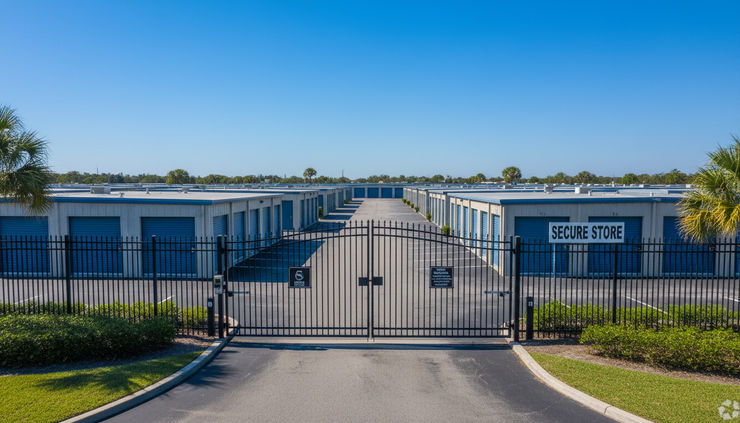
For operators managing multiple sites, the stakes are higher. One market may need aggressive lease-up pricing. Another may need rent protection. Another may need unit-specific changes. A single competitor-based rule will not work across a portfolio.
That is where better systems matter.
A.R.M.S. Revenue Intelligence connects competitive intelligence with internal operating data, so market pricing becomes part of a broader revenue view. The goal is not to chase every competitor move. The goal is to see which moves matter, where they matter, and what the business data says to do next.
To see how that connection works, visit A.R.M.S. Revenue Intelligence.
FAQ
Why should self storage facilities track competitor pricing?
Competitor pricing shows how a facility compares in the local market. It can reveal promotions, rate pressure, and possible supply issues. It should be reviewed with occupancy, unit type, demand, and conversion data.
Should a facility match a lower competitor rate?
Not by default. A lower rate may reflect that competitor’s vacancy, product limits, promotion strategy, or short-term goals. Match only when the broader revenue data supports it.
What makes two self storage units hard to compare?
Climate control, access type, floor level, drive-up access, security features, property age, cleanliness, availability, and location all affect value. Two units with the same size can justify different prices.
How often should operators review market intelligence?
Review frequency depends on market activity and portfolio size. Fast-moving markets may need frequent checks. Stable markets may need less frequent review. Rate changes should still tie back to actual site performance.
How does revenue management software improve pricing decisions?
Revenue management software helps connect market data with internal performance data. That makes it easier to price by unit type, site conditions, demand, and revenue goals instead of reacting to a single competitor rate.
The useful signal is the one you can explain
Competitor prices matter. They are visible to customers. They affect shopping behavior. They can point to real changes in the market.
They do not reveal strategy, costs, occupancy, objectives, or performance.
A good pricing decision uses the competitor rate as context, then asks better questions. What unit type is affected? How much inventory is available? What demand is coming in? How are customers responding? What position does the property hold? What revenue result does the business need?
When those answers work together, pricing becomes clearer. Not automatic. Not reactive. Clear.


Comments